
You know you should exercise. You hear it again and a gain.
But when you're already managing long hours, friends, family and low energy, "for your health" feels abstract - and exhausting.
What if you saw it as the most direct investment in your focus, mental energy, and burnout resilience instead?
This January I’m focusing on exercise.
I'm not telling you to work out more. I'm showing you how ordinary people with the physiology of founders and executives - people like you – can use exercise to improve their work performance and resilience.
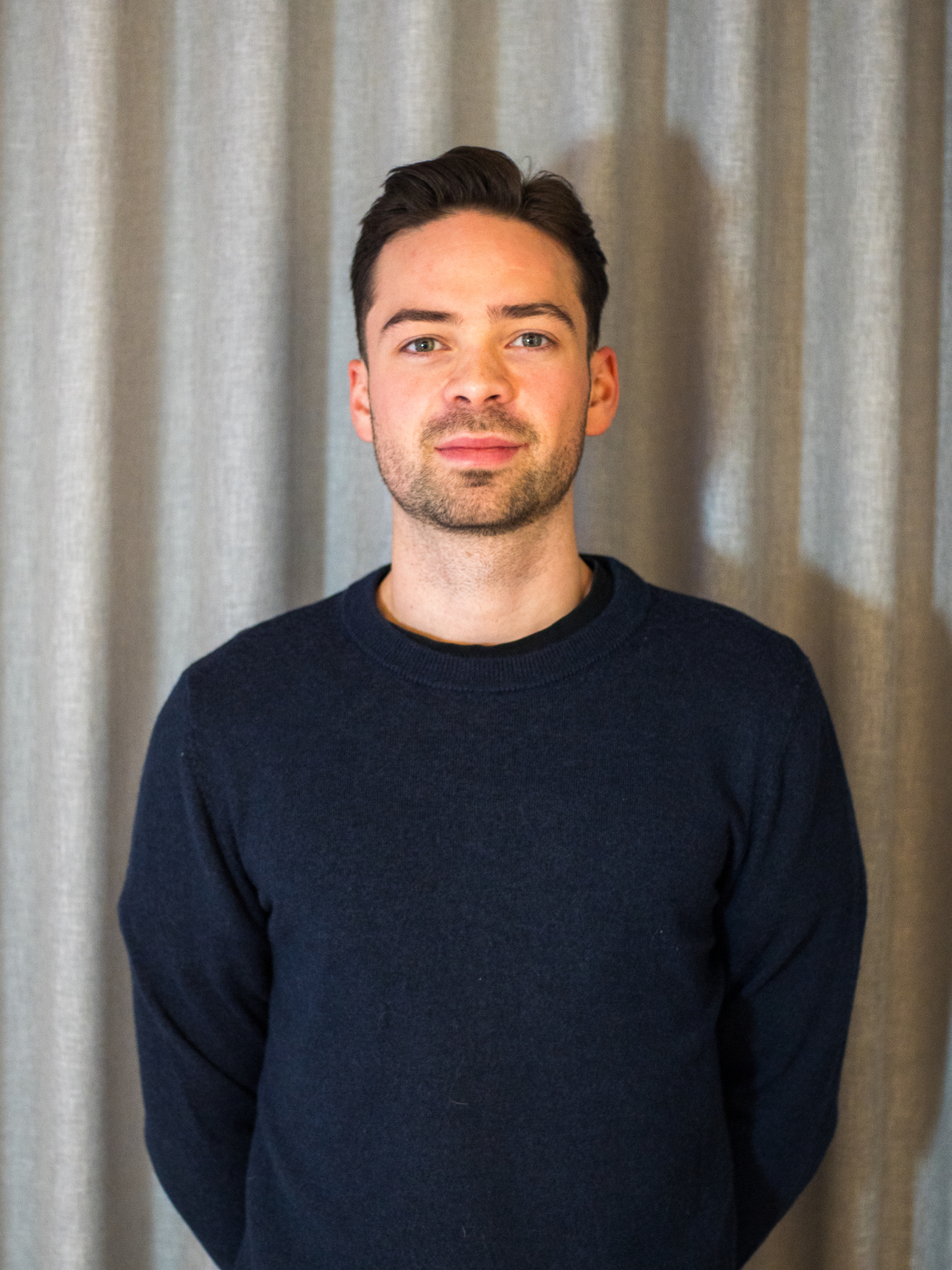
I'm Nicolas, and I help entrepreneurs and business leaders master their mental energy.
Today's newsletter
Takeaway:
🏃➡️ Start exercising
Not for only for your health and your longevity, but for your performance at work.
How exercise influences you cognitive abilities:
In a study by Stern et al. (2019), researchers included 132 cognitively normal adults, who were less physically active than average, in a 6-month trial.
The aim was to investigate how exercise impacts cognitive abilities and brain health.
Participants were randomly assigned to one of two groups:
Either aerobic exercise or stretching/toning (control group).
Both groups performed their prescribed activities 4 times per week for 6 months.
In the exercise group, the prescribed activity was approximately 40-55 minutes of aerobic exercise at 75% of maximum heart rate.
Participants were tested at baseline, midway (12 weeks), and at the end of the 6-month intervention.
What the researchers found was striking for ambitious professionals:
Aerobic exercise significantly improved executive function.
Executive functioning is your brain's ability to control and regulate other cognitive abilities.
It primarily takes place in the prefrontal cortex. An area that can therefore be descibed as the brain's executive center.
Executive functioning involves:
· Planning and organizing
· Staying focused and shifting attention when needed
· Controlling impulses
· Solving problems flexibly
· Adapting to changing situations
· Learning from mistakes
In other words, everything that's vital for entrepreneurs and business leaders.
In this study, researchers used two tests to measure this.
The Groton Maze Learning Test, that involves discovering a hidden 28-step pathway through a 10×10 grid using trial-and-error across 5 attempts. Thereby measuring strategic problem-solving and error monitoring.
The Set Switching Task has participants rapidly alternate between classifying letters and numbers while measuring how much slower they become when switching tasks.
It captures mental flexibility and cognitive control.
For business leaders, this reflects the essential ability to move smoothly between contexts - from financial analysis to creative strategy to managing people - without each mode contaminating the next or causing decision-making delays.
Importantly, the researchers tested many cognitive abilities in this study, but only executive functioning showed significantly greater improvement in the exercise group compared to the stretching group.
If you’re looking for a tip or two to get started with exercise, I recommend The High-Performance Journal. A newsletter I’ve been following and really enjoying lately.
👉Subscribe here
Vo2 Max is part of the explanation:
Not surprisingly, the exercise group showed significantly greater improvements in VO2 max (aerobic capacity).
Statistical analysis showed that this cardiovascular improvement partially explained the executive function gains, though not completely.
The authors suggest other contributing factors include increased cerebral blood flow, improved insulin sensitivity, and likely elevated BDNF (brain-derived neurotrophic factor) secretion.
Effects are stronger with age:
The authors found that the effect of exercise on executive functioning increased with age.
It was stronger for participants aged 40 than for younger adults, and even stronger for those aged 50 and above.
Brain growth:
Researchers measured brain structure using MRI and found that aerobic exercise increased cortical thickness in the left frontal region.
This is an area known from other research to be involved in executive function.
What grabbed my attention this week?
Toxins and microplastics. I'd heard of them before, but I listened to a seriously interesting Diary of a CEO podcast this week (bit of an old episode, but still...).
We fight so hard for good sleep, exercise, and clean eating in our pursuit of longevity.
But then we spray our bodies with toxins - deodorant, soaps, shampoos. And we don't even fully know the consequences.
So let me hear:
What can we learn?
Well, it's pretty simple, isn't it?
If you aren't already exercising regularly, start doing it.
Not only for your health and longevity, but for your performance here and now.
Should you be doing aerobic exercise 4 times a week?
Well, it seems like a good start.
But with a background in sports science, I would never advise anyone to skip strength training.
- Something that's also shown to have cognitive benefits.
So, I would start slow to make sure I'm not pushing past my current abilities and provoking injuries, and then I would focus on building sustainable habits.
Because as in everything else, consistency wins.
📩 If you liked todays newsletter, Im sure you will like me premium 1 dollar newsletter than I sent out every Wednesday.
It's a shorter, more practical newsletter that helps you implement habits that will increase your mental energy. 👉 Upgrade here to receive the newsletter this Wednesday.
Articles used for this newsletter:
Stern, Y., MacKay-Brandt, A., Lee, S., McKinley, P., McIntyre, K., Razlighi, Q., Agarunov, E., Bartels, M., & Sloan, R. P. (2019). Effect of aerobic exercise on cognition in younger adults: A randomized clinical trial. Neurology, 92(9), e905–e916. https://doi.org/10.1212/WNL.0000000000007003
|
Until next time, Nicolas Lassen |
Disclaimer: The above is mainly based on the 1 article mentioned in the end of this newsletter, and aims to provide key takeaways and a condensed overview of its content. While the essence is drawn from the original articles, some parts have been simplified or rephrased to enhance understanding. Please note that we at, OptiMindInsights or any other potential writers or contributors to our summaries, do not accept responsibility for any consequences arising from the use of these summaries and/or newsletters as a whole. The information provided should not be considered a substitute for personal research or professional advice. Readers are encouraged to consult the original articles for detailed insights and references. The summary does not include references, but they can typically be found within the original publication. Always exercise due diligence and consider your unique circumstances before applying any information in your personal or professional life. We refer to the creative commons for reproducibility rights.
